
The Invisible Heart
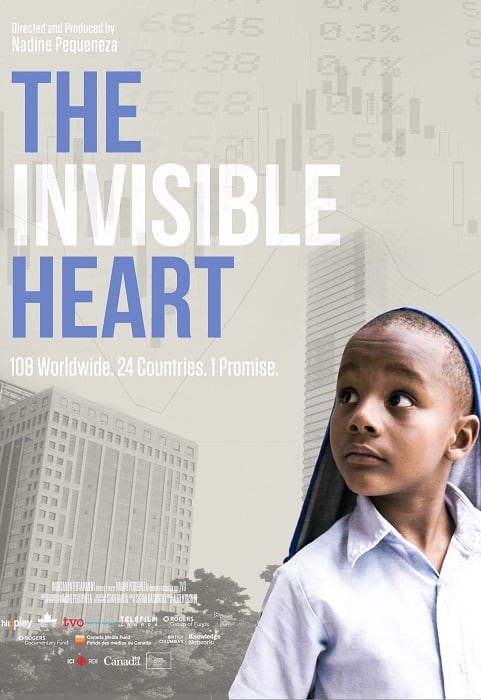
What happens when capitalism and charity intersect? From Wall Street to life on the street, The Invisible Heart tracks the birth of social impact bonds. An unorthodox marriage between government services and private-sector investments, this burgeoning financial model promises to solve society’s most complex problems, from crime to homelessness – but is it delivering? Set in Canada, the United States and the United Kingdom, this is compelling documentary weighs the ethics of putting human rights causes like housing and education in a relationship with capitalist interest. By examining this form of impact investing from the viewpoint of multiple stakeholders, the film raises all the important questions about the role of the state and the role of markets.
Featuring Sir Ronald Cohen, J.B. Pritzker, Andrea Philips, Michelle Stewin, LaTonya and Reginald Rounsaville, Brigitte Witkowski, Math Radfar, John Carty, Mildred Warner, David Macdonald, Caroline Mason, Larry Brown.
Presented by Indiecan Entertainment, Telefilm and the Rogers Group of Funds through the Theatrical Documentary Program, in association with The Invisible Heart Outreach Partners.

Credits
Director/Writer Nadine Pequeneza
Producer Nadine Pequeneza
Executive Producer Jane Jankovic for TVO
Cinematographer Stan Barua CSC
Sound Recordists Jeff Reyes and David Draper
Editor Sarah Bachinski
Composer Alex Khaskin
Produced by HitPlay Productions in association with TVO, Knowledge Network and ICI RDI, and with the participation of CMF, Rogers Documentary Fund, OMDC Film Fund, the Canadian Film or Video Production Tax Credit, and the Ontario Media Development Corporation Film and Television Tax Credit. Supported by Hot Docs Deal Maker and Sheffield Meet Market.


The Invisible Heart tackles social inequality with vigour. I was enthralled for the entire run-time.
Approaching this polarizing issue Pequeneza doesn’t insert herself into the film but you can see her own invisible heart as she follows two very human stories about people whose lives have been affected by SIBs.
The first documentary on Social Impact Bonds – a two-part interview with Nadine Pequeneza – Director/Producer of The Invisible Heart.
A good documentary enthralls and informs you, even if you went into it without any clue of what it was about. The strength of The Invisible Heart lies within its cast of characters… the faces of real people are what makes the Heart so potent.
The Invisible Heart has come to offer both sides of the ongoing SIB debate with sober judgement and a human face.
The names Bond: Social Impact Bond. The Invisible Heart questions investors profiting form social services.
A new documentary shines an important light on a new approach that seeks to radically reshape the way social services are provided.
The Invisible Heart takes a deep look at social impact bonds and raises multiple questions for governments, including the idea of the government paying profits to investors.
Social impact bonds ‘problematic’ says director of new social finance documentary The Invisible Heart.
The Invisible Heart weighs the ethics of putting human rights causes like housing and education in a relationship with capitalist interests.
An amazing piece of work, The Invisible Heart, makes a strong case for action on the underlying issues that SIBs seek to address, while illuminating the complexity of the questions about whether profit and social good of this kind can go hand in hand. It raises all the important questions about the role of the state and the role of markets.
The Invisible Heart offers a provocative and timely account of a critical policy issue that has largely escaped public discussion and debate. Taking the viewer on a fascinating journey from corporate boardrooms to the frontlines of social service delivery, the documentary brings to life the complex story of social impact bonds and is a must see for anyone interested in how markets and finance continue to transform the world in which we live.
An important film that highlights both the intended benefits and potential pitfalls of Social Impact Bonds (SIBs). If SIBs are to become as prevalent as their champions hope, then it is crucial that member of the public are well informed about them. This excellent film serves that purpose very successfully.
Focusing on the US and Canadian experience with Social Impact Bonds (SIBs). The Invisible Heart starkly contrasts the ongoing debate between supporters and detractors of SIBs with the real lives of the people delivering and receiving the services on the ground. This raises some difficult questions pertinent to the times we live in, and the lack of simple answers is reflected in the film’s portrayal of the polarised nature of the debate. The documentary highlights the clear need for a more nuanced understanding of when SIBs might be useful, and how to make sure they are effective.
SIBs will require success stories and best practices to get over naysayer’s fear and cynicism.
The investors appear clueless about the systemic issues they think they can resolve.
I thought a SIB might be a better place for me to invest some of my money than other stocks and mutual funds. I firmly believe it is NOT.
Care is needed to explain how they can be structured terribly, how they can be structured well and that being a new mechanism, a lot of experimentation is to be expected.
I will be more vigilant about the funding mechanisms for projects in my community.